

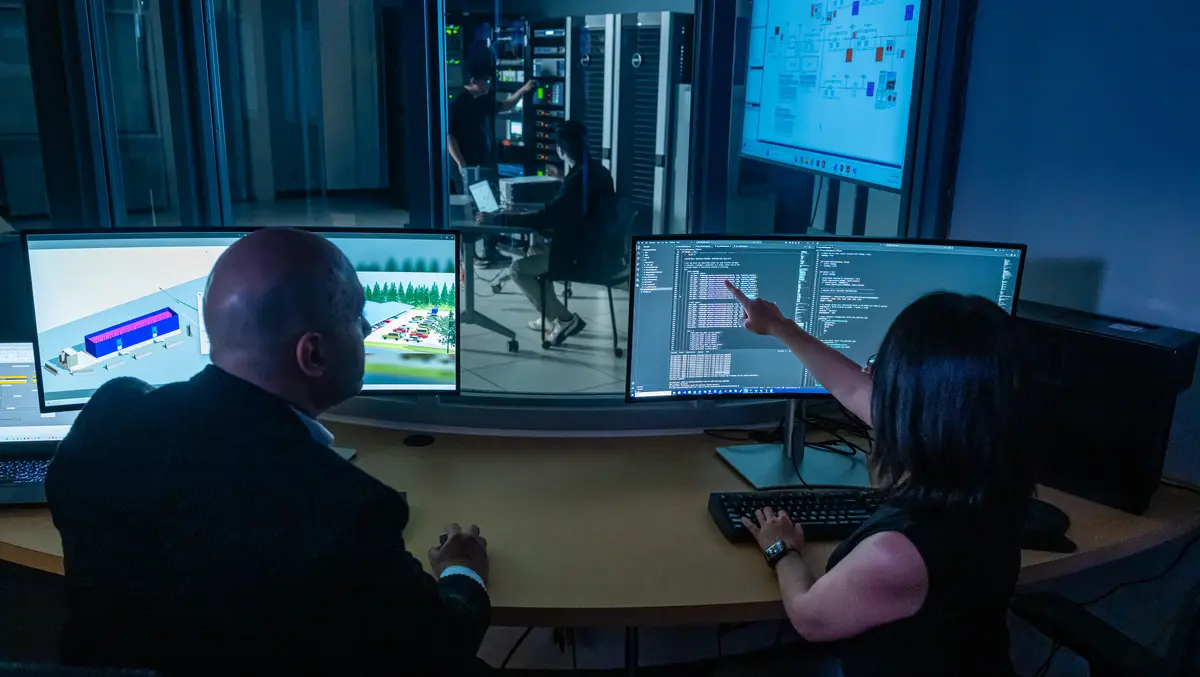
BCIT launches digital twin hub for critical infrastructure
Thu, 9th Jul 2026
BCIT has launched the Digital Twin Innovation Hub, a new applied research facility designed to support testing of infrastructure technologies in a simulated environment.
Operated by the BCIT Smart Microgrid Applied Research Team, the hub is intended to let industry partners, researchers, and students assess technologies before they are introduced into live systems. The facility can simulate electrical grids, renewable energy systems, electric vehicle charging infrastructure, and other operational environments using real-world data.
The launch comes as operators of power, transport, and water networks face pressure to update systems that are becoming more connected and complex. Testing new control systems or cybersecurity measures on live infrastructure can be difficult because outages or operational disruption may not be acceptable.
Digital twin technology creates a virtual version of a physical system, allowing users to test changes, analyse performance, and examine possible faults without affecting day-to-day operations. BCIT is positioning the hub as a shared testing space for organisations managing critical infrastructure.
According to the institute, the facility brings together power systems, communications networks, operational technologies, and cybersecurity in one environment. That setup is intended to help users examine how different parts of infrastructure interact under real-world conditions.
For operators, the main use case is reducing uncertainty before deployment. By trialling technologies in a digital environment first, organisations can identify issues earlier, review cybersecurity risks, and decide whether a system is ready for investment or field use.
The initiative also reflects BCIT's wider applied research model, which links businesses with academic expertise, specialist facilities, and student participation. The hub adds a collaborative setting for work on infrastructure problems that are difficult to study in the field.
Dr. Moein Manbachi, Acting Director, SMART and DTI-Hub Research Lead, described the facility as a single environment that brings together several parts of modern infrastructure.
"What makes this facility unique is the ability to bring power systems, communications networks, operational technologies, and cybersecurity together in a single testing environment," said Dr. Moein Manbachi, Acting Director, SMART and DTI-Hub Research Lead, BCIT.
He said the broader aim is to create a trusted innovation sandbox for organisations.
"Our vision is to create a trusted innovation sandbox where organizations can strengthen resilience, accelerate technology adoption, and prepare critical infrastructure systems to meet the challenges of an increasingly connected and rapidly changing world," said Manbachi.
Industry interest
One of the early partners is Fuse Power, which is focused on vehicle-grid integration. The facility could help firms test how electric vehicles, charging infrastructure, distributed energy resources, and utility networks work together as those systems become more interconnected.
"Vehicle-grid integration represents an important opportunity to make Canada's electricity system cleaner, more flexible, more affordable, and more resilient while creating new value for EV owners, utilities, fleets, and communities," said Bryan Taylor, Chief Executive Officer, Fuse Power.
"As EVs, charging infrastructure, distributed energy resources, and utility systems become increasingly connected, the BCIT Digital Twin Innovation Hub can help industry accelerate innovation by giving partners the ability to model real-world scenarios, optimize performance, validate solutions, and build workforce capacity in a practical applied research environment. Fuse Power Management is proud to be partnering with BCIT to help advance safe, secure, and scalable vehicle-grid integration solutions for Canadians," said Taylor.
The institute also framed the hub as part of workforce development. Students will be able to gain experience on industry projects while organisations gain access to research support and technical testing.
That link between training and industry needs is central to the institute's case for the project, particularly in sectors such as energy and infrastructure, where digital systems, communications, and cybersecurity are increasingly intertwined.
Dr. Justin Williams, Associate Vice President, Academic, said the project fits BCIT's role in serving the province's economy.
"Applied research is one of the ways BCIT delivers value to BC," said Dr. Justin Williams, Associate Vice President, Academic, BCIT.
"The Digital Twin Innovation Hub helps organizations make more informed decisions about adopting new technologies while giving students experience solving real industry challenges. That combination strengthens both our economy and the skilled workforce needed to support the province's energy systems and critical infrastructure," said Williams.