

Blackline sees early uptake for G8 safety wearable
Fri, 18th Sep 2026 (Today).webp)
Blackline Safety said its G8 wearable is seeing early customer adoption across several markets following its commercial launch in March.
The Calgary-based safety technology group is using that momentum to highlight broader demand for connected monitoring tools for industrial workers. Both new customers and existing users have adopted the latest version of its wearable offering.
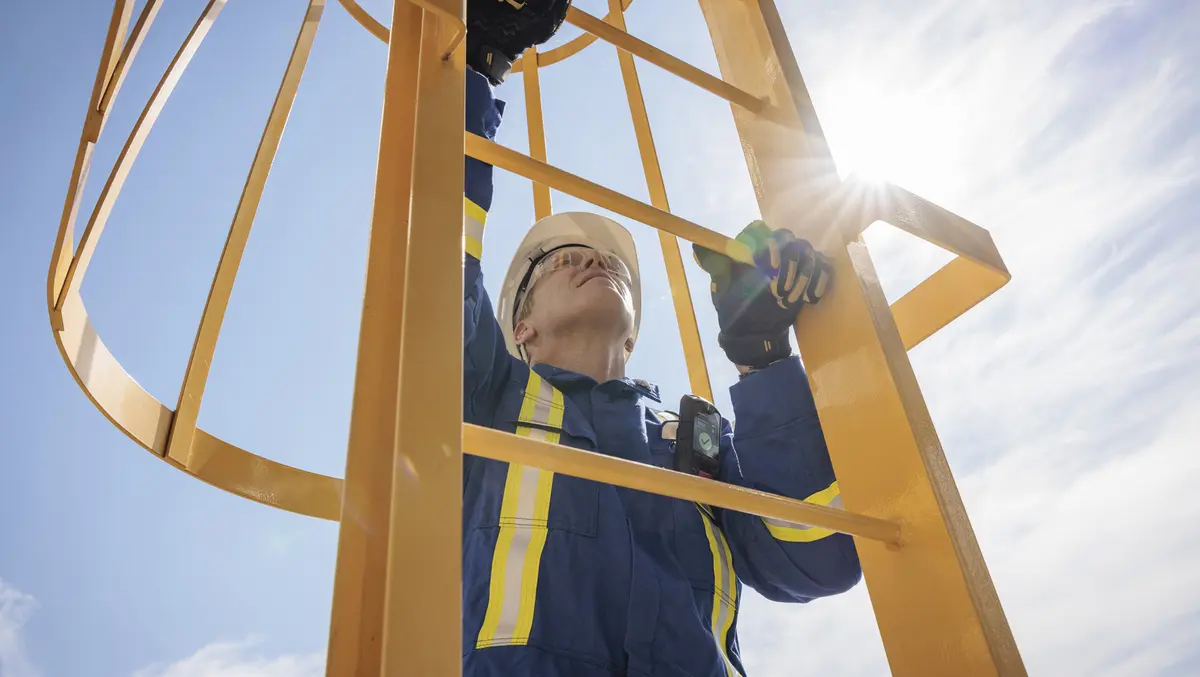
G8 combines gas detection, lone worker protection, two-way push-to-talk communication, and live field data in a single wearable unit. The device links to the Blackline Live platform, giving safety and operations teams visibility into worker location, movement, and incidents across a site.
Blackline identified three features attracting particular customer interest: built-in push-to-talk communication, expanded worksite geofencing through ZoneAware, and a newly available CSA-certified low-range hydrogen sensor for North American users.
The push-to-talk function lets workers speak directly with colleagues, safety teams, and monitoring staff through the same device used for gas detection and lone worker alerts. The goal is to reduce the number of separate tools carried by staff in higher-risk settings.
ZoneAware adds a geofencing layer to Blackline Live. Organisations can define worksite zones and monitor worker locations, activity, and movement within them to support emergency response, evacuations, and compliance reporting.
The hydrogen sensor expands gas detection options for customers working around hydrogen. Blackline said the low-range sensor is intended for North American operations that need additional monitoring as hydrogen use grows in some industrial settings.
Customer uptake
One business adopting the G8 system is Vida Bioenergy, a bioenergy producer in Europe. The company needed a connected safety system for a new plant that covered gas detection, lone worker protection, and communications for employees and contractors.
Blackline used the deployment to illustrate the demand it is seeing from industrial operators seeking a single wearable device rather than several separate systems. The company operates in more than 75 countries and said its connected platform is used by tens of thousands of people.
"When a worker is in trouble, every second counts," said Cody Slater, Chief Executive Officer of Blackline Safety. "Knowing there's a problem is only the first step. G8 ensures you know exactly what's happening, where that worker is, and how to reach them immediately. In an emergency, that ability to act in real time can make the difference between rescue and recovery."
Blackline also cited Vida Bioenergy's assessment of the device as part of the early market response.
"G8 makes work as safe as it could possibly be," said Dr. Gary Cartwright, Plant Manager of Vida Bioenergy. "I had free choice to go anywhere I liked, but the G8 was just so good, so robust and, in my view, it was the best on the market."
Industry backdrop
The launch comes as employers in sectors such as energy, manufacturing, and heavy industry face pressure to improve worker protection, incident response, and site oversight. Wearable devices that combine communications and environmental monitoring have become a bigger part of that effort, particularly where lone workers or hazardous gases are involved.
Blackline's system is built around continuous connectivity through cellular and satellite networks. According to the company, its installed base has generated more than 336 billion data points and triggered more than eight million emergency alerts.
Blackline also said G8 and the Blackline Live platform have received two OH&S Industrial Hygiene Awards in the IoT - Connected Devices and Software categories, as well as a Safety and Health Excellence Award. The accolades support the commercial case Blackline is making as it seeks to expand adoption of its latest wearable among industrial customers.
For operators considering connected safety tools, Blackline's pitch centres on consolidation: one device intended to handle communications, gas monitoring, worker status, and location data in a single system. The early response to G8 suggests customers are willing to adopt that model when deploying safety equipment across new sites and upgrading existing fleets.