

M5 launches Sentinel to secure voice edge on IP networks
Fri, 13th Nov 2026 (Today)
M5 Technologies has launched its Mediatrix Sentinel session border controller range for organisations moving voice and analogue services onto IP networks. The products are designed to secure the voice edge as copper lines are retired.
The Sherbrooke-based Canadian voice infrastructure supplier said devices such as elevator circuits, alarm lines, intercoms, analogue telephone adapters and other SIP-connected equipment are increasingly being moved onto internet-facing networks with limited segmentation. It argues these often-overlooked connections can expose organisations to toll fraud, scanning, denial-of-service attacks, eavesdropping and ransomware intrusion.
The launch comes as businesses and public bodies continue replacing legacy copper services with IP-based alternatives. That shift has brought more mission-critical voice devices onto the same networks used for data and cloud communications, often leaving older operational equipment exposed at the network edge.
Industry figures cited by M5 point to the scale of the issue. The Communications Fraud Control Association estimated global telecom fraud losses at USD $38.95 billion in 2023 and projected that figure would reach USD $41.82 billion by 2025.
M5 also cited broader security research on connected devices. It pointed to findings in Nokia's Threat Intelligence Report showing distributed denial-of-service attacks on many telecom networks rose from one or two a day to more than 100 a day, driven in part by insecure IoT devices. It also referenced Palo Alto Networks research which found that 32.5% of devices on corporate networks operate outside IT control and that 77.74% of networks have poor segmentation.
Voice edge risks
M5 said these conditions create openings on the voice plane, where SIP scanning tools can probe exposed systems, fraudulent traffic can exploit unprotected trunks and unencrypted RTP streams can be intercepted. Compromised phones or gateways can also become entry points for wider network attacks.
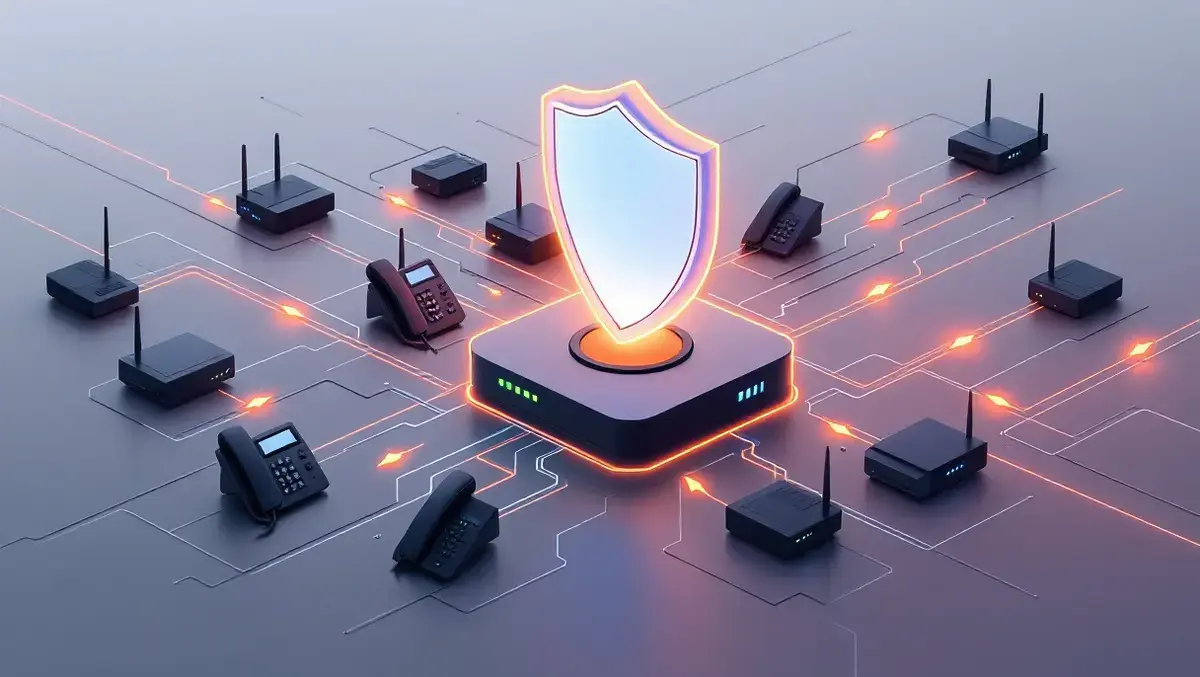
Session border controllers sit between internal voice systems and external networks, managing and securing SIP traffic. The Sentinel line is intended to provide that control point for enterprises and operators without requiring wholesale replacement of existing voice equipment.
The range includes the virtual Sentinel CS and hardware appliances such as the Sentinel 400. According to M5, the products are designed to encrypt SIP signalling and media, conceal internal network topology, apply access controls and restrict abusive peers. They are also intended to keep analogue and POTS-replacement devices behind a managed SIP boundary.
M5 said the system can replace internal IP addresses and identifiers with aliases, helping shield private network details from external parties. The products also support SIP over TLS and SRTP encryption for signalling and media, and can convert UDP or TCP traffic to TLS and RTP to SRTP at the boundary.
Other functions described by M5 include automatic blacklisting of peers that connect at abnormal frequency, firewall rate limiting, call admission controls for trunks and role-based management with brute-force login protection. The company added that the Sentinel series is listed for Microsoft Teams Direct Routing with specified DGW firmware.
Operational devices
A key part of the pitch centres on analogue and operational devices that remain essential even as communications systems move to IP. M5 said its Sentinel products can work with Mediatrix gateways and Audiotrix ATAs to place elevators, alarms and fax services on a validated SIP path under a common security model.
That approach reflects a wider challenge for organisations modernising building systems and emergency communications alongside telephony. Devices once isolated on dedicated copper lines may now sit on broader IP networks, sometimes without the same scrutiny given to laptops, servers or cloud services.
"Copper retirement and cloud calling are pushing mission-critical analog and SIP devices onto the internet-facing edge faster than teams can inventory them," said Roberto Roman, Product Line Manager at M5 Technologies. "If that edge is open to scanners and fraudulent calls, the cost is stolen minutes, disrupted operations and a path into the network. Sentinel puts a policy-enforced SIP boundary in front of that risk."
M5 said the target market includes financial institutions, government and defence, energy groups, airports, healthcare organisations, public safety bodies and telecom operators. These sectors often rely on voice systems for operational continuity and regulatory reasons while also facing pressure to replace older POTS-based infrastructure.
The company traces its roots to 1992 and said it serves operators, enterprises, governments, OEMs and integrators in more than 100 countries. It adopted the M5 Technologies brand in 2021, having previously operated as Media5 Corporation.
"For more than three decades we have built carrier-grade voice technology where a compromised call path is not an option," said Jerome Lagasse, President and Chairman, M5 Technologies. "Sentinel encrypts what must stay private, hides what attackers should never see, and keeps critical analog and SIP devices under operational control."