

Solid State Logic desks power The Voice France mix
Fri, 17th Jul 2026.webp)
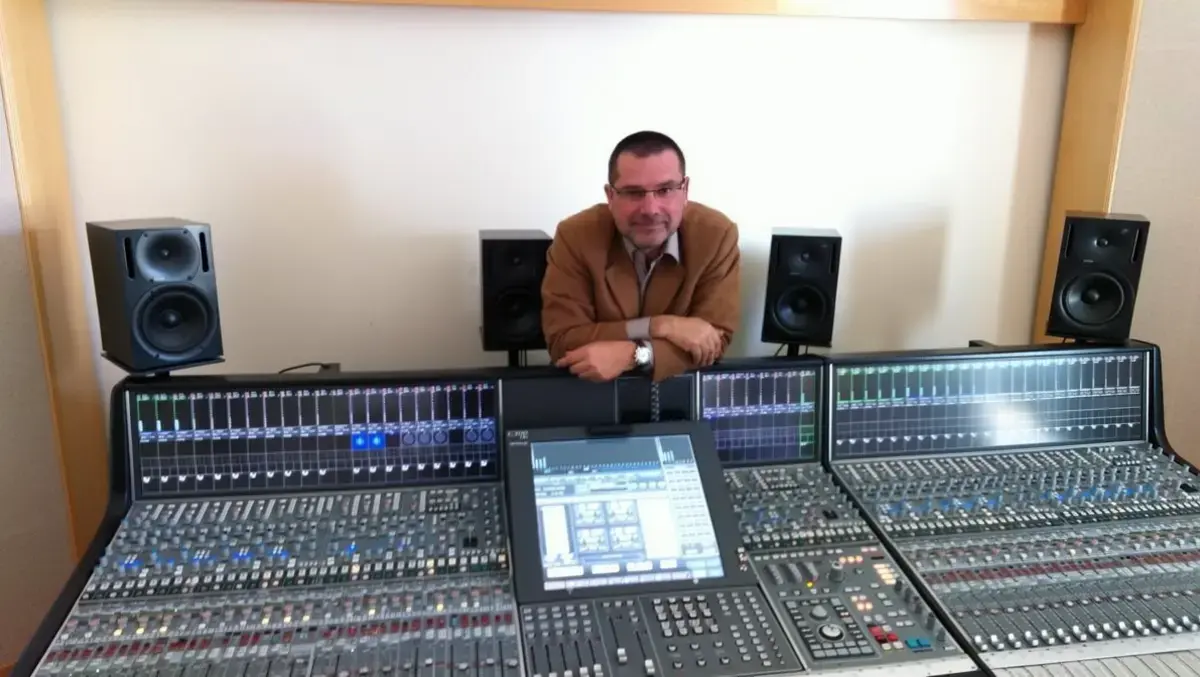
Solid State Logic consoles were used throughout the latest season of The Voice in France, with four Live L550 Plus desks handling broadcast, front-of-house and monitor mixing.
The setup was deployed on The Voice - La plus belle voix, which airs on TF1. Two consoles were assigned to broadcast duties, one to front-of-house and one to monitors. The systems were linked over Solid State Logic's Blacklight II MADI network, while Algam Enterprise supplied the equipment and S Group provided broader broadcast production support.
The arrangement reflects how large live television productions are dividing audio tasks across several linked mixing positions rather than concentrating them on a smaller number of desks. In this case, the monitor position fed core sources, mainly the orchestra and music elements, to the rest of the chain, allowing the front-of-house and broadcast teams to focus more closely on vocals and the final programme sound.
Jean-Marc Aringoli, who worked on the production, said the monitor console controlled most gain settings for the orchestra and music feeds. That left front-of-house with direct preamp control mainly over the vocals, a decision intended to keep the singers' voices consistent for television output.
"It is the monitor console that sends out sources - mainly everything to do with the orchestra and music - and it sets the gains for us," said Jean-Marc Aringoli.
In the audio control room at Studio du Lendit in Paris, the two broadcast consoles split responsibilities between building the music mix and creating the final on-air output. One desk took the stereo output from the music console and combined it with vocals, backing vocals, additional instruments and other elements needed for the television mix.
"The other console handled the final mix, taking the stereo output from the music console, onto which all the vocals, backing vocals, additional instruments and various other elements required for a television show were layered," said Aringoli.
That separation is significant in a format such as The Voice, where vocal clarity is central to both studio judging and audience viewing. Aringoli said direct control over vocal gains was essential for maintaining levels that meet broadcast loudness requirements while reacting quickly during a live performance.
"The monitor console sends out sources - mainly everything to do with the orchestra and music - and it sets the gains for us. The only thing where I have control over preamps at FOH is the vocals. That is what I need in order to react very quickly - to have control over the gains to provide the broadcast with a level that is consistent with the loudness requirements," said Aringoli.
Shared system
The four consoles were connected over Blacklight II MADI, enabling engineers to share sources and processing between positions. The production team said the network also added redundancy, with two backup fibre paths running from the set so broadcast could access orchestra mixes and open microphones directly from the core if a fault occurred during the show.
Aringoli said the linked design also allowed engineers to assist one another in real time. He cited cases where effects could be sent across the network to support another position and where string parts were grouped into premixes before reaching front-of-house, reducing the number of individual channels that had to be managed there.
"Sharing resources is very easy with SSL, where we share MADI," said Aringoli.
"It is a way of duplicating our sources and securing things," he said.
"Those exchanges are possible, and we can imagine backing things up through these many exchanges between the consoles," he added.
Live workflow
The desk layout also mattered because of the pace of the programme. The Voice runs as a live entertainment format with a large number of songs and scene changes, and Aringoli said the console's layer structure helped him move sources quickly and keep control of the show.
"The ease of use with this console lies precisely in being able to bring sources back very quickly to wherever you want them and, with the multi-layer system, to organise your layout properly so you can find your way around very easily and follow the show as consistently as possible," said Aringoli.
He also said vocal presentation remained a constant focus in the television mix, with onboard effects used to shape the sound heard by viewers. The orchestra, he said, was managed internally through the desk's Effects Rack, handling both dynamics processing and time-based effects.
"That often forces me to wrap the voice as much as possible to make it sound as beautiful as possible on air. We have a certain number of effects available in the console, and those are stored in the console. I use only internal console effects to manage the orchestra. Everything is done internally with the Effects Rack. The whole orchestra is managed with effects, both in terms of dynamics and pure effects such as reverb, gate, delays and so on. The idea is also to build an Effects Rack on which, for example, I can control all those delays with a given tempo that I trigger from a key that I have assigned," said Aringoli.
On the broadcast side, stems were also processed before reaching the final master path. Aringoli said that included both internal and external treatment, with inserted hardware used where needed and the master chain adjusted for dynamics and correction.
"That can be through external processing, because we also have an A/D rack into which things are inserted. The idea is also to put the whole chain in phase in a general sense. All these stems then go to the master, which is also processed internally and externally, both in terms of dynamics and correction, or through inserts that are placed on the chain," said Aringoli.
High sound levels
The demands of the show go beyond broadcast mixing. Aringoli said the front-of-house side operates more like a concert environment, with production and musical direction calling for high sound pressure levels in the studio to match the expectations of performers and coaches appearing live.
"For FOH, we are really in a concert system, so there is a very high sound level, which is also a request from production and from the musical director," said Aringoli.
"We only have coaches who perform live. They are used to a certain sound level, and we have to provide them with that sound level. So we work fairly loud," he said.
With around 130 rehearsed songs stored as snapshot scenes, he said the production relied on the desk's Query function to check routing and levels rapidly before each number.
"I quickly check with Query on my send to know what is going to be sent, for example, in an auxiliary to an effect. It lets me very quickly check what is going into my stem and redo the levels easily. In fact, it is going to lay out for me what is going into that system, and I can very quickly see how, for example, the machines are balanced and be able to rebalance them very easily, and always remain in a mix without having lost mix mapping in the moment. So Query is a very, very good tool," said Aringoli.