

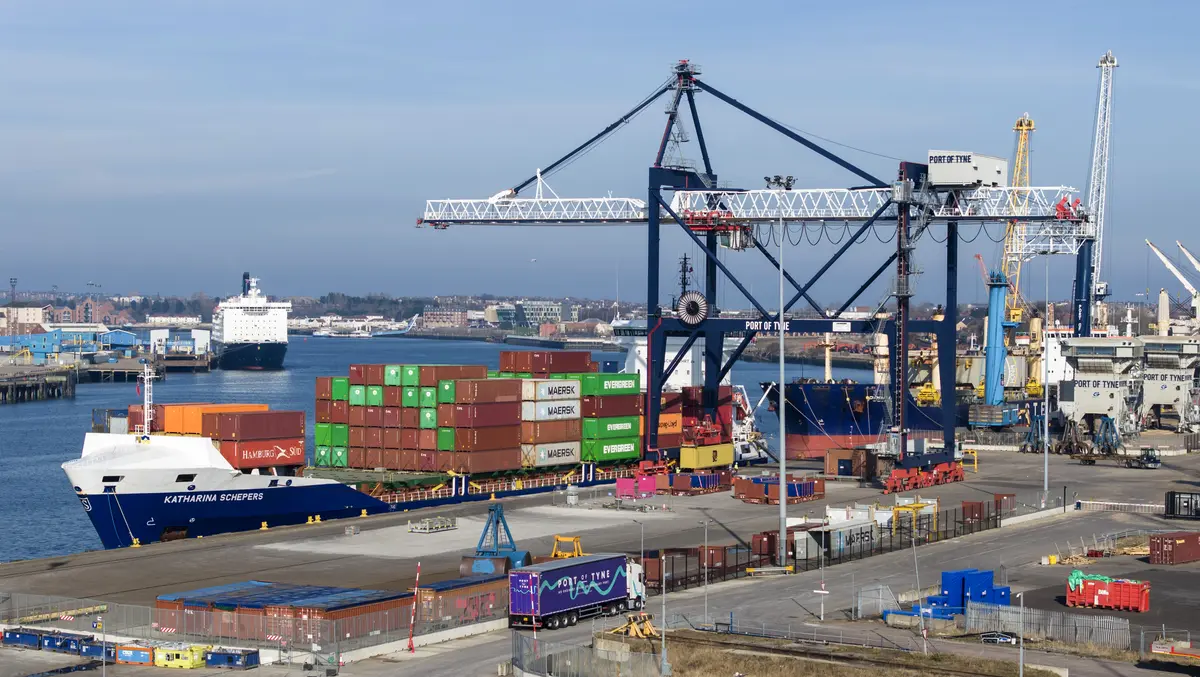
Port of Tyne hails gains from private 5G rollout
Wed, 17th Dec 2025
Port of Tyne is reporting significant operational gains from an on-site private 5G network supplied by Ericsson and using BT spectrum, after a full year of live use across its deep-sea gateway on the north-east coast of England.
The port has deployed Ericsson Private 5G across a 620-acre estate. The infrastructure serves more than three kilometres of berths on both sides of the River Tyne.
The network uses Ericsson's core and radio equipment on site. It runs over licensed spectrum provided by BT.
Port of Tyne depends on connected vehicles, machinery and video systems for daily operations. The port handles traffic and cargo movements in an environment that changes layout several times each year.
Existing wireless systems did not meet the port's requirements for reliability and scale. Fixed cabling across the site was costly and difficult to adapt during reconfigurations of roads, storage areas and berths.
Ericsson's private network now carries a range of mobility-led and safety-related applications. The company describes the deployment as a test case for complex industrial operations that rely on real-time data and moving assets.
Use cases at the port now include live container scanning, monitoring of personal protective equipment, detection of restricted-area breaches, road-condition analysis, emission monitoring and high-security access control. These processes use a mix of cameras, sensors and connected devices.
Vehicle-mounted cameras link to an artificial intelligence engine. This setup supports automated checks for road defects before they become serious issues.
Drones operate over the private 5G network for stock control. They also carry out visual inspections of port infrastructure.
The port is working with Caterpillar on CatCommand, a system for remote operation of heavy equipment. The private 5G connectivity supports remotely controlled shovels, which remove the need for workers to enter hazardous ship holds during some cargo-handling tasks.
Tamsin Warren, Head of Technology and Transformation at Port of Tyne, said the first 12 months of service had demonstrated the value of consistent connectivity across the estate.
"After a full year of operating on private 5G, we've seen firsthand how reliable wireless connectivity strengthens our day-to-day operations. From safety-critical activities to logistical environments, the network has given us consistent, real-time visibility across our whole site. It's helping our teams to work more safely and make better decisions with the live data to move us forward to becoming one of the UK's smartest and greenest ports," said Warren.
The network runs dual 4G and 5G technology. It is designed to support current applications and further digital tools under development.
BT supplies spectrum and integration for the deployment. Ericsson provides the on-site core network and radio systems.
Brian Jackson, Director Surveillance & Smart Solutions at BT, said the setup has performed under conditions of constant change at the port. "Over the past year, Ericsson's private 5G network has delivered the performance Port of Tyne needs in an environment that changes constantly. By combining BT spectrum with Ericsson's dual 4G and 5G infrastructure, the port has a dependable platform for the technologies it relies on today, as well as those it plans to adopt in the future," said Jackson.
Ericsson positions the project as an example of how private 5G can underpin industrial digitalisation. The company points to benefits where organisations run large sites, manage moving machinery and require rapid data transfer.
Manish Tiwari, Head of Enterprise 5G at Ericsson, said Port of Tyne was showing what dedicated 5G networks can do in operational settings. "Port of Tyne is demonstrating how private 5G can support complex industrial operations that depend on mobility, safety, and real-time visibility. The results from the first year demonstrate what a wireless network with predictable low latency, strong security, and support for high mobility can unlock - laying the groundwork for continued digital development across the port," said Tiwari.
Safety and oversight
Port managers are using the network for enhanced operational awareness. Real-time video analytics and sensor feeds give staff a continuous view of activity across loading areas, storage zones and internal roadways.
PPE monitoring and restricted-area detection support compliance with safety rules. High-security access systems use live video and sensor checks at entry points.
Emission monitoring runs over the same network. This data supports the port's environmental reporting and planning.
The private 5G system also supports remote inspections through drones and cameras. This approach reduces some manual checks in hard-to-reach areas of the site.
Future expansion
Port of Tyne plans to widen its use of digital tools based on its private 5G infrastructure. It is assessing further automation and data-driven processes for logistics, maintenance and safety.
The organisations expect the dedicated network to act as a base for future applications. These may include more advanced analytics, expanded use of remote-controlled machinery and additional sensor-based monitoring across the port.
Port of Tyne, BT and Ericsson intend to keep developing the deployment as new industrial systems and devices arrive on site.