

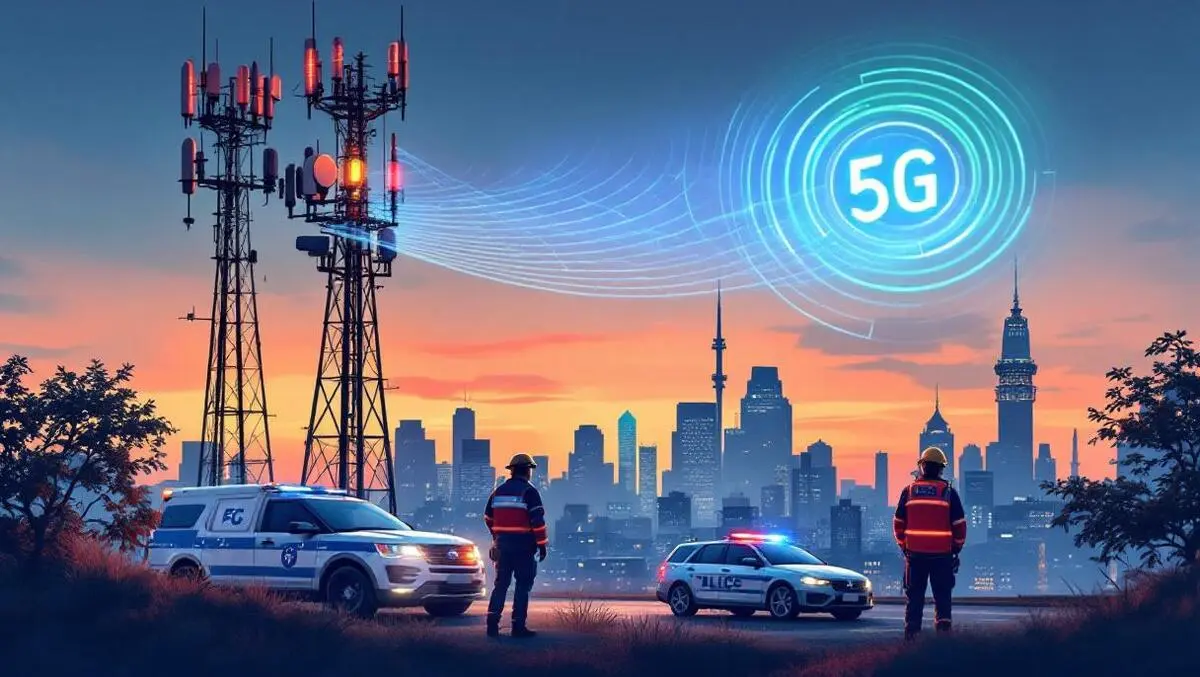

Global spending on LTE and 5G NR-based public safety broadband infrastructure and devices is set to exceed USD $6.3 billion a year by the end of 2028, according to new market forecasts from SNS Telecom & IT.
The forecast points to continued momentum behind nationwide communications networks for emergency services and other public sector agencies. It also signals a longer-term shift away from legacy land mobile radio systems and towards 3GPP-based broadband technology across multiple countries.
SNS Telecom & IT said annual investments in public safety LTE and 5G infrastructure and devices reached USD $5 billion in 2025. The firm expects the market to grow at a compound annual rate of about 8% over the next three years.
European migration
The research highlights planned transitions in Western and Northern Europe, where several governments have set out programmes to move public safety users off TETRA and Tetrapol systems and onto nationwide mission-critical 3GPP networks between 2028 and 2031. The countries cited include the United Kingdom, France, Finland and Sweden.
South Korea stands out as an earlier mover. SNS Telecom & IT said the country carried out its transition sooner than most peers. It linked the change to what it described as a previous lack of a digital land mobile radio network with nationwide coverage.
Large deployments
Alongside migration plans, the research lists a growing set of national-scale public safety broadband deployments that are already operational or are moving into delivery.
SNS Telecom & IT singled out Saudi Arabia's USD $8.7 billion mission-critical broadband network for defence, law enforcement and intelligence agencies. The firm described the project as one of the largest to emerge recently.
In Asia, the research points to the Hong Kong Police Force's USD $250 million 5G-based NGCS project. SNS Telecom & IT said it is comparable in scale to national programmes in smaller countries. It also said the project follows an approach that differs from mainland China.
The report's list of other national initiatives spans a mix of long-running and newer programmes. It includes the United States' FirstNet, South Korea's Safe-Net, Great Britain's ESN, France's RRF, Sweden's SWEN and Finland's VIRVE 2. It also names New Zealand's PSN, the Royal Thai Police LTE network, Japan's PSMS, Ireland's new mission-critical communications system, the Italian Ministry of Interior public safety LTE/5G service, Spain's SIRDEE broadband network, Hungary's EDR 2.0/3.0 5G-ready PPDR broadband network, the Turkish National National Police's KETUM, Romania's hybrid PPDR broadband network, Qatar MOI's LTE network, Oman's public safety broadband network, Jordan's hybrid TETRA-LTE communications system, Egypt's NAS and the Brazilian Federal Government's private network project.
Technology focus
SNS Telecom & IT said 3GPP-compliant MCX services form a foundational component of nationwide public safety broadband networks. It said multiple contracts have been awarded for gateway-enabled interoperability solutions and standards-based IWF technology.
The research also highlights in-building coverage enhancement as a focus area. It points to 5G NR sidelink. It also lists hybrid LMR-broadband terminals and other alternatives for off-network communications. It includes rapidly deployable network assets and satellite direct-to-device connectivity.
The report also cites the integration of NG911, live video, geolocation services, AI analytics and situational awareness. It frames these areas as part of the evolving scope of public safety broadband deployments.
Operator approaches
The research identifies a parallel track outside state-funded national programmes. It said public mobile operators in some markets pitch network slicing over standalone 5G cores as an alternative to dedicated networks.
In the United States, SNS Telecom & IT said Verizon and T-Mobile have launched first responder network slices. It said these services aim to rival AT&T-operated FirstNet.
The report also notes deployments of smaller private 5G networks that address specific operational needs. SNS Telecom & IT cited Mexico City Police, which it said uses a standalone private 5G network for low-latency streaming of visual content to wireless VR headsets as part of an immersive training system.
In Spain, SNS Telecom & IT said Madrid City Council and the country's Emergency Military Unit have adopted tactical bubble solutions. It described these as transportable private 5G cell sites combined with network slicing over commercial 5G networks. It linked the deployments to emergency preparedness and forest firefighting operations.
With nationwide mission-critical broadband deployments moving from concept to delivery, the firm expects annual spending on public safety LTE and 5G infrastructure and devices to rise above USD $6.3 billion by the end of 2028.